


Real Life Accident: Crew Members Severely Injured While Lowering Fast Rescue Boat (FRB)
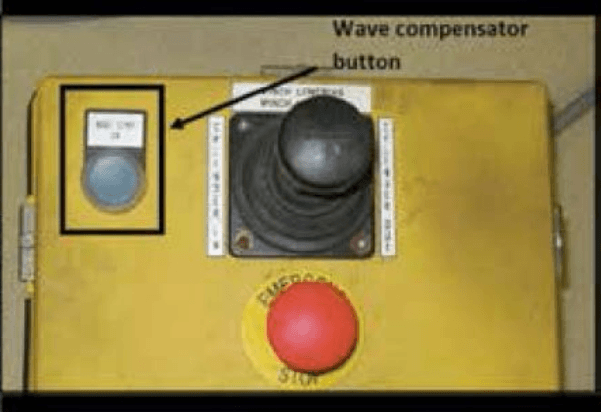
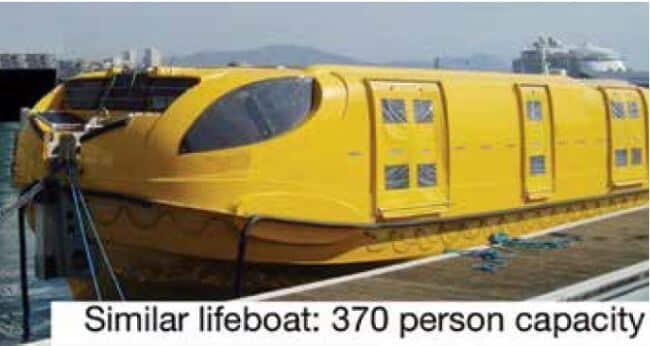
The crew of an LNG tanker were in process of lowering the fast rescue boat (FRB). The FRB was nearly 6.5m in length, weighed 2,200 kg and could be launched from a remote control unit (as below) or from inside the boat, using a winch brake release wire. As one crew was about to release the brake to lower the FRB, another crew reached across and pressed the ‘wave compensator’ button on the remote control unit. His understanding was it must be activated before the boat reached the water.
As soon as this button was pressed the FRB descended at high speed hitting the water about 18 metres below. Several of the FRB crew were seriously injured and had to be evacuated. The wave compensation feature was designed to ensure there was continuous tension on the fall wire when the FRB was riding the sea swell. When active, the lifting capacity of the davit was reduced by approximately 90% to around 300 kg; the davit winch would continuously tension the fall wire but would have insufficient power to lift the FRB.
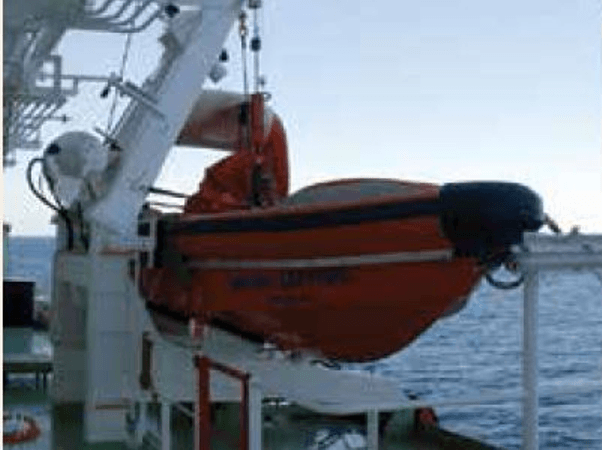
The manufacturer’s instruction stated that the wave compensation feature should only be activated when the FRB was waterborne. As an additional safety measure, to prevent the wave compensation unit from activating if the wave compensator button was pressed before the FRB was waterborne, the system was fitted with a safety interlock. In this case, the safety interlock did not function correctly.
Lessons learned
- The FRB davit wave compensator safety interlock did not operate as designed to prevent the fast rescue boat from free falling to the water. It was found that the safety interlocks on the wave compensator systems on board this vessel and two sister ships had been electrically by-passed thereby preventing them from functioning. As a result, the wave compensators on board all three ships could be engaged regardless of whether the FRB were waterborne or suspended from the fall wire.
- The maintenance and testing of the FRB davit by approved service agents had not identified that the wave compensator safety interlock was not correctly functioning on board the vessel.
- The training provided to the crew did not ensure they were sufficiently familiar with the function or operation of the wave compensator or its safety interlock.
- The FRB manual, as supplied by the manufacturer, did not provide sufficient guidance for the crew in the operation of the wave compensator and its safety interlock.
- The job hazard analysis for the operation of the FRB was incomplete and did not include an assessment of the hazards associated with the operation of the wave compensator.
Reference: nautinst.org
Do you have info to share with us ? Suggest a correction

- Real Life Incident: Vessel Collision in Good Visibility

- Real Life Incident: Severe Injury To Deck Crew While Leaving Berth
- Real Life Incident: Departure Damage in Very Restricted Waterway
- Real Life Incident: Low Situational Awareness Has High Impact Consequence
- Real Life Incident: Fouled Anchor in a Designated Anchorage
- Real Life Incident: Fire On Barge Carrying Scrap Metal Causes $7 Million Worth Of Damage
Latest Case studies Articles You Would Like:
Subscribe To Our Newsletters
By subscribing, you agree to our Privacy Policy and may receive occasional deal communications; you can unsubscribe anytime.
Most accident happen onboard is human error
Its better to read the manual 1st before operation ..